


 Brochures


Up High with Heritage Stone Access: A Candid Conversation with Richard Martin
We joined Richard Martin, stone conservator and founder of Heritage Stone Access, at the top of Worcester Cathedral. Standing 50+ metres above the city on a windy day, the reality of the job is clear. It is a demanding mix of high-stakes logistics and delicate historical preservation.
In this Q&A, Richard discusses the practicalities of maintaining Britain’s most iconic structures and the hardware required to do it safely.
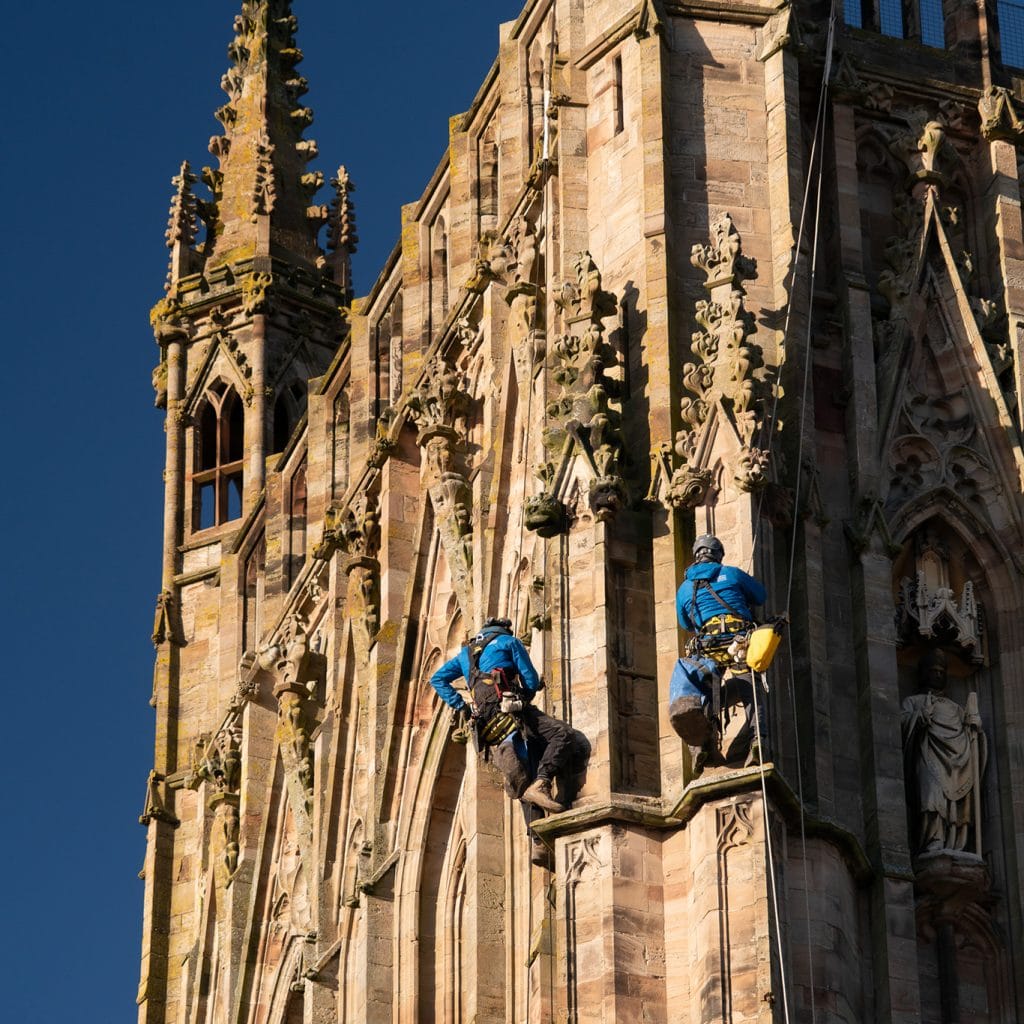
What are the main challenges nowadays working in Height Safety?
“It is rarely the height itself. It’s the environment. On heritage sites, we are often working around nesting peregrines or protected bat roosts. That adds a layer of legal and physical complexity to any rigging plan. Communication is the other big hurdle. When you’re suspended in a hard-to-reach area, you have to be able to translate complex structural decay into a clear, actionable report for a client who is standing on the ground. If they don’t understand the risk, the inspection hasn’t done its job”.
What is your preferred hardware for inspections?
“I stick with Petzl. Most of my team trained on their systems, and there is a massive safety benefit to that kind of universal familiarity. Whether we are using an I’D for descents or an ASAP for back-up, knowing exactly how that kit will behave in a rescue scenario is non-negotiable. We keep a close eye on their technical bulletins and safety updates. Standardisation is what keeps the site predictable”.
What’s the strangest thing you have come across whilst working?
“Preventing a fire from the Main Tower of York Minster. I was mid-task when I spotted smoke rising from a roof in the Shambles. From the ground, the fire crews couldn’t see the seat of the fire because of the narrow, medieval streets. I ended up on my mobile, acting as a high-altitude spotter to guide the fire chief in. It was a bizarre 15 minutes. I was suspended 70 metres up, listening to sirens get closer and directing engines through the city like a live GPS feed. We saved the building, but it’s not exactly in the standard job description”.
What’s the tallest building you have worked on?
“The actual metre count matters less than the exposure. You can be on a relatively low church tower, but if the wind picks up and you have a massive ‘sail effect’ on your ropes, it feels significantly taller than a 100-metre modern block. Exposure changes your perspective. It keeps you focused on the rigging”.
What innovations would you like to see in the future for Height Safety?
“Better integration. I want to see communication tools that don’t feel like an afterthought and technical textiles that actually handle a UK winter without adding bulk. In this industry, complexity is the enemy of safety. I’m looking for streamlined solutions that allow us to focus on the stone, not the gear”.
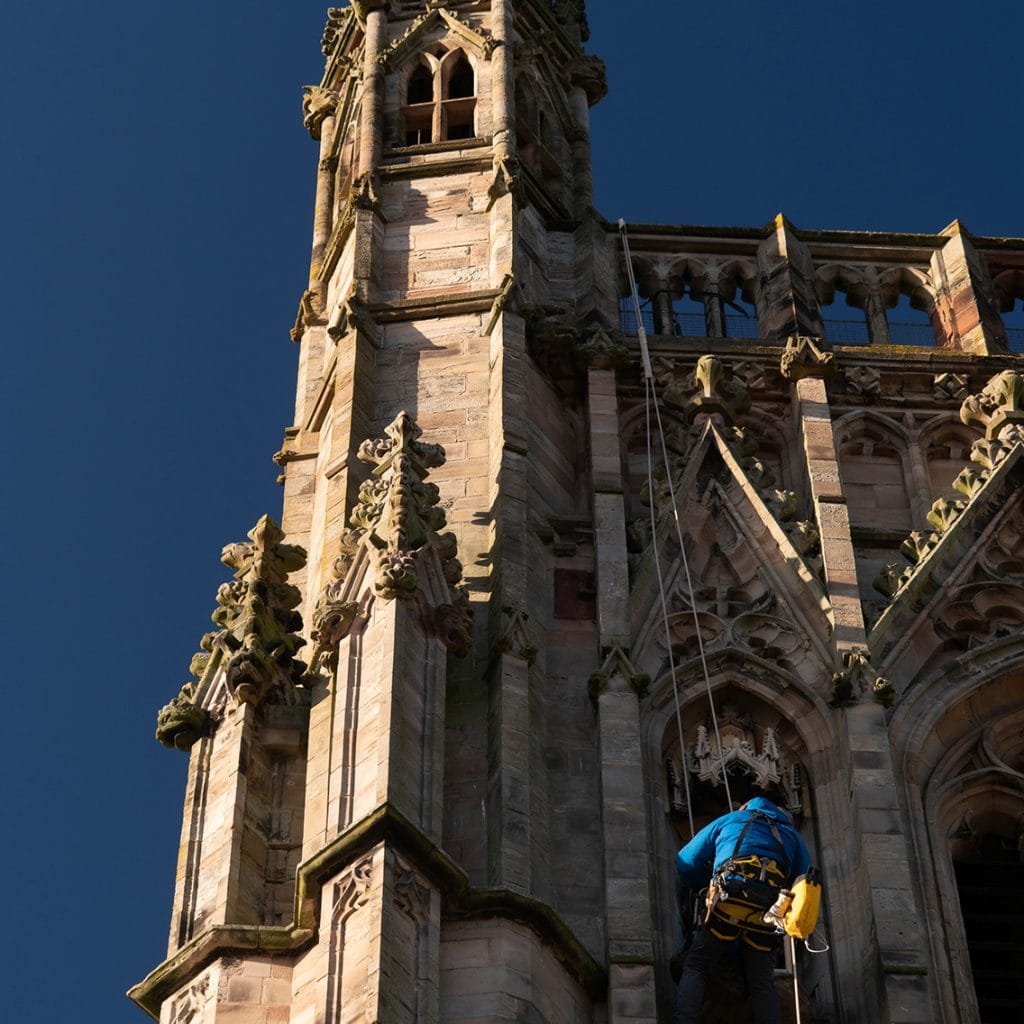
Working with English Braids
Heritage Stone Access represents the sharp end of technical rigging. Precision and material reliability are paramount here. English Braids supports Richard’s team with EN1891 Type A static ropes. These are specifically engineered for the abrasion resistance and low-stretch characteristics required in heritage conservation.
Whether the task involves ancient masonry or modern infrastructure, our UK-manufactured cordage is built to provide the technical fidelity these environments demand.
If you’re looking for rope solutions for your own height safety needs, get in touch with our team.
Photo credits: Duncan Lomax, Heritage Stone Access Ltd and Heritage Stone Access Ltd


